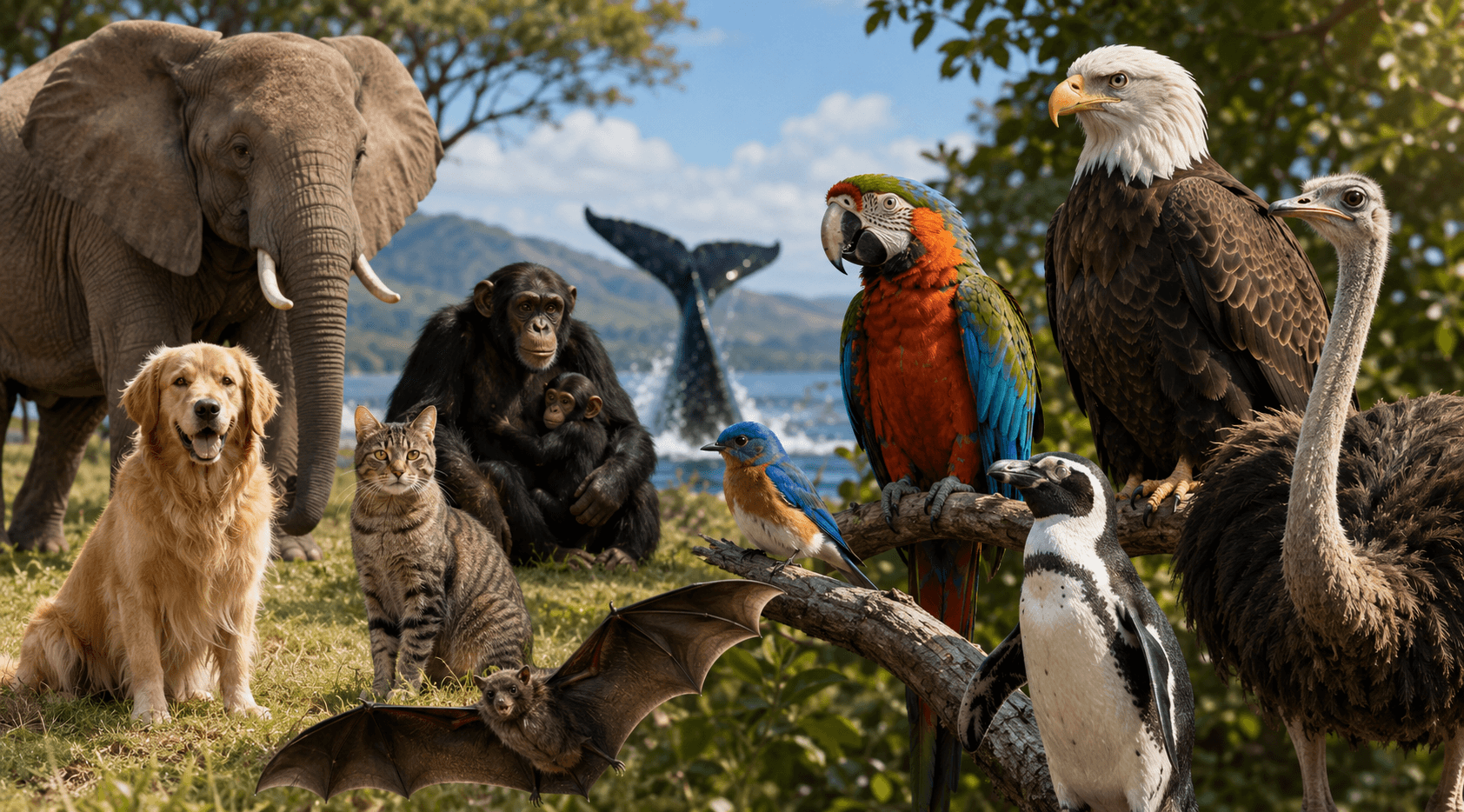
Have you ever wondered whether mammals and birds belong to the same animal group? Many people confuse these categories because both groups share several basic traits. However, mammals and birds have important biological differences. Therefore, understanding those differences makes animal classification much easier. The keywords are mammals and birds often appear in searches from curious learners. Meanwhile, modern AI tools like thotchat ai can explain confusing topics. However, reliable learning still requires a clear understanding of basic science.
Are Mammals Birds?
No, mammals are not birds. Mammals and birds belong to different biological classes. Scientists place mammals within the class Mammalia. Meanwhile, they place birds within the class Aves. Therefore, scientists classify these groups separately because their bodies develop differently. Both groups belong to the vertebrate category because they have backbones. However, their defining characteristics differ considerably.
What Makes an Animal a Mammal?
Mammals have several characteristics that distinguish them from other vertebrates. Most mammals have hair or fur covering parts of their bodies. Additionally, female mammals produce milk for their young. Mammals also possess specialized mammary glands. These glands provide essential nourishment during early development. Most mammals give birth to live young. However, some mammals lay eggs, including platypuses and echidnas. Mammals also breathe through lungs. Furthermore, their bodies generally regulate internal temperature through metabolic processes. Common mammals include dogs, cats, elephants, whales, bats, and humans.
What Makes an Animal a Bird?
Birds possess different features that define their biological class. Feathers represent one of the most recognizable bird characteristics. In fact, every living bird species has feathers. Birds also have beaks instead of mammalian teeth. Most birds lay eggs and reproduce through internal fertilization. Many birds can fly because their bodies support efficient movement through air. However, flight does not define every bird. For example, penguins, ostriches, and emus cannot fly. Nevertheless, they remain birds because they possess other defining characteristics.
Why Do People Confuse Mammals and Birds?
Several similarities can make animal classification confusing. For example, both groups qualify as warm-blooded vertebrates. Additionally, mammals and birds breathe air through lungs. Both groups also care for their offspring in many cases. Furthermore, certain mammals can fly. Bats provide the clearest example because they fly using modified forelimbs. However, bats remain mammals because they possess mammalian characteristics. Therefore, their ability to fly does not make them birds. This distinction shows why scientists consider several characteristics when classifying animals.
How Can You Identify Mammals and Birds?
You can use several simple observations to identify each animal group.
Check for Feathers
Feathers strongly indicate that an animal belongs to the bird class. Even flightless birds have feathers. Therefore, feathers provide a useful identification clue.
Look for Hair or Fur
Hair or fur usually indicates a mammal. Some mammals have dense coats, while others have very little visible hair. For example, whales have limited body hair despite living entirely in water. Nevertheless, whales remain mammals because they possess other mammalian traits.
Consider Reproduction
Most mammals give birth to live offspring. In contrast, birds generally lay eggs with hard protective shells. However, mammals have reproductive exceptions. Therefore, reproduction alone should not determine an animal's classification.
Examine How Animals Feed Their Young
Female mammals produce milk to feed their young. This feature provides one of the strongest mammalian characteristics. Birds instead feed their young with food they obtain or prepare. Moreover, their feeding methods vary across different species.
Can Technology Help Explain Animal Classification?
Learning complex science concepts can sometimes feel overwhelming. Fortunately, educational technology can make difficult topics easier to understand. For example, that ai can help users explore questions through conversational explanations. However, users should compare scientific information with reliable educational sources. Similarly, Gamma can organize educational information into clear visual presentations. This approach works especially well when students compare mammals and birds.
Why Do Visual Comparisons Work?
Visual comparisons can simplify complex biological differences. A structured presentation can place key characteristics side by side. For instance, you could compare feathers, fur, reproduction, feeding, and body structure. Gamma can help turn those comparisons into organized educational content. As a result, learners may understand important differences more quickly. Still, technology should support learning rather than replace careful research.
What Are the Biggest Differences?
The easiest approach involves comparing the defining characteristics of both groups.
This comparison makes the answer to are mammals birds straightforward.
Mammals and birds share some traits, but they remain separate animal groups.
How Can You Remember the Difference?
Try remembering three simple clues for each animal group. For mammals, remember hair, milk, and mammary glands. For birds, remember feathers, beaks, and eggs. These clues can help beginners identify broad animal categories quickly. However, nature includes important exceptions. Platypuses challenge the usual mammalian reproduction pattern. Likewise, flightless birds challenge assumptions about bird movement. Therefore, classification depends on multiple biological characteristics rather than one feature.
Where Does Gamma Fit Into Learning?
Students and educators often need simple ways to present scientific information. Instead of creating every visual manually, they can use presentation tools. Gamma offers a practical way to organize educational ideas into polished visual formats. You can structure comparisons, explanations, and examples within one presentation. For instance, a lesson about mammals and birds could include animal images. It could also include comparison tables and key definitions. This approach can make complex information easier to review. Furthermore, it can make classroom presentations more engaging.
Conclusion
So, are mammals birds? No, mammals and birds belong to separate biological classes. Although both groups share characteristics, their defining traits clearly separate them. Mammals typically have hair and produce milk for their young. Meanwhile, birds have feathers and usually reproduce by laying eggs. Understanding these differences makes animal classification much simpler. Additionally, tools like thotchat ai and Gamma can support clearer learning experiences. If you want professional presentations, consider using Gamma for organized visual explanations. Smart presentation tools can transform complicated information into accessible learning material.